
What is a CO2 Incubator?
A CO2 incubator is a laboratory equipment designed to simulate the physiological conditions necessary for cell growth. Unlike conventional incubators, CO2 incubators maintain a precise carbon dioxide atmosphere—usually around 5% CO2—to replicate the pH of human and mammalian tissues via bicarbonate buffer systems in the culture media. Understanding the technology behind CO2 incubators is vital for researchers and laboratories professionals aiming to optimize cell culture outcomes and ensure reproducibility.
Key Components and Technology
1. CO2 Control System
Central to CO2 incubators is a reliable CO2 sensing and regulation system. Most modern models utilize infrared (IR) sensors or thermal conductivity sensors to continuously monitor CO2 concentration. This continuous feedback ensures the internal CO2 atmosphere remains stable, crucial for maintaining the correct pH balance in the culture medium.
2. Temperature Regulation
CO2 incubators provide tight temperature control, typically within ±0.1°C of the set point—commonly 37°C, which mirrors human body temperature. Advanced models employ microprocessor-controlled heaters coupled with multiple sensors to distribute heat evenly and reduce fluctuations.
3. Humidity Management
Maintaining high humidity (typically above 95%) prevents cell cultures from desiccation. CO2 incubators incorporate water pans or automated steam humidification systems to achieve and maintain this humidity, while filters minimize the risk of contamination.
4. Contamination Control
Modern CO2 incubators are engineered with contamination prevention in mind. Features such as HEPA filtration, UV sterilization, and antimicrobial copper interiors have become standard. Additionally, the use of independent HEPA filters on air circulation systems and tight door seals further protects sensitive cultures.
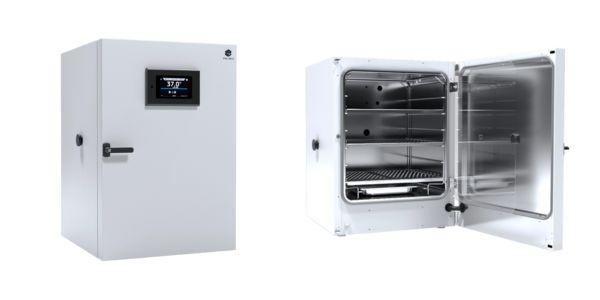
How to choose the Right CO2 Incubator
Define Your Application First
The right incubator depends heavily on what you’ll be growing and how you’ll be using it:
- Basic cell culture/teaching laboratories - a standard CO₂ incubator with good temperature and CO₂ stability may be enough.
- Advanced research (stem cells, cancer research, IVF, gene editing) - you’ll need precise humidity and CO₂ control, excellent contamination prevention, and possibly oxygen control.
- Clinical/pharmaceutical laboratories - compliance, documentation, and data traceability are critical (GLP/GMP requirements).
Sterilization & Contamination Control
One of the biggest risks in any incubator is contamination. Look for features that minimize risk and make cleaning easy.
- High-heat sterilization (180 °C): kills all microbes and spores without chemicals.
- Fan-free natural convection: voids contamination from fans while still maintaining uniform conditions.
- Rounded chamber corners & stainless steel interior: easier cleaning, no hidden debris.
- HEPA filtration / UV lamps: optional in some models, though high-heat sterilization is usually superior.
Chamber Size & Capacity
Incubators come in different sizes—capacity can range from under 100 liters to over 300 liters.
- Small (under 100 L): great for labs with limited space or smaller projects.
- Medium (150–200 L): suitable for most research and diagnostic labs.
- Large (250+ L): ideal for high-throughput labs or shared facilities.
- Stackable designs: save floor space by stacking two incubators vertically with adapters.
Control Accuracy & Stability
Cells are sensitive to even small fluctuations in temperature, humidity, and gas concentration.
- Temperature: look for ±0.1 °C precision and uniform distribution.
- CO₂ Control: IR (infrared) sensors are more accurate and stable than TC (thermal conductivity) sensors, especially in humid conditions.
- Humidity: high and stable humidity (90–95% RH) prevents sample drying. Advanced models offer active humidity control.
- O₂ Control (Optional): some incubators allow hypoxic or hyperoxic conditions, essential for stem cell or cancer research.
User Interface & Connectivity
Modern institutions need intuitive control and traceability.
- Touchscreen controllers (Smart PRO, SmartTouch): easy programming and real-time monitoring.
- Remote access (LAN/Wi-Fi): monitor incubator conditions outside the lab.
- Data logging & alarms: event tracking (door openings, deviations) for compliance and troubleshooting.
- Multi-segment programming: useful for experiments requiring gradual changes in temperature or gas concentration.
CO₂ incubators are more than just laboratory equipment—they are the foundation of reliable, reproducible, and contamination-free cell culture. By delivering precise control over temperature, CO₂ levels, and humidity, these incubators safeguard sensitive cell lines and ensure meaningful research outcomes.
With innovations such as high-heat sterilization, fan-free air circulation, and intuitive Smart PRO controls, modern CO₂ incubators like POL-EKO’s ILC 180/260 SMART PRO set new standards for performance and reliability. Reach out to our specialists to find out the best solution for your needs.